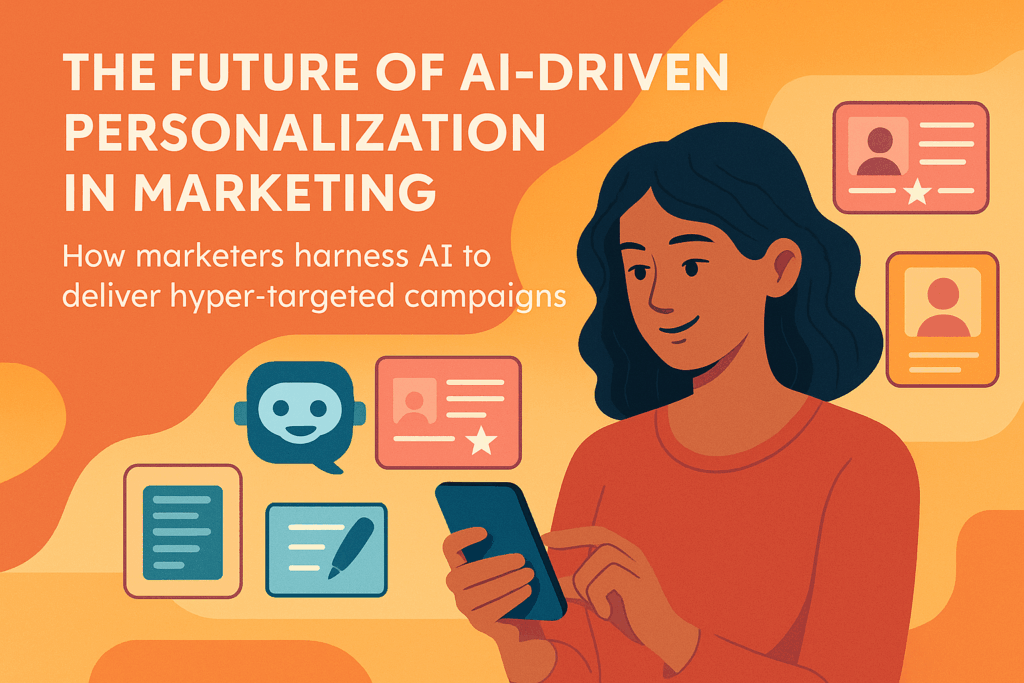
Last summer, Maya—a mid-level marketing manager at an e-commerce startup—faced her greatest challenge yet. With five campaigns lined up, SEO falling flat, and no design team in sight, she felt the pressure mounting. One evening, she juggled writing blog intros, scheduling posts, and tweaking ad copy—until she discovered the power of AI tools in digital marketing. She tried ChatGPT for ideation, Midjourney for visuals, and Zapier for automation. Overnight, Maya went from exhausted to empowered. Campaigns launched faster, visuals dazzled, and routine tasks vanished. Best of all, her return on ad spend soared. Maya’s story proves a powerful truth: when AI meets strategy, marketing becomes unstoppable.
1. ChatGPT (OpenAI): A Core AI Tool in Digital Marketing for Content & Conversation
Adoption is skyrocketing across the industry. ChatGPT helps marketers brainstorm ideas, map audience segments, draft ad headlines, create email copy, and even build first-pass landing page text. Maya used it to generate 20+ headlines per campaign in minutes—doubling her ideation speed and freeing time for strategy.
Quick Wins:
Feed real customer pain points to get sharper copy.
Ask for multiple tone styles (friendly, premium, B2B) and test.
Use system prompts to keep messaging on brand.
2. Google Gemini & Claude: Strategic AI Tools in Digital Marketing
Looking to diversify beyond one model? AI tools in digital marketing stacks often pair Gemini (deep Google workspace integration) with Claude (great for longer, nuanced writing and policy-safe drafts). Use Gemini to summarize GA4 insights or build Google Ads variants; use Claude to refine messaging frameworks and campaign briefs.
Pro Tip: Run the same creative brief through both and combine the best outputs.
3. DALL·E 3 & Midjourney: Creative On-Demand
Visual storytelling matters. These generative image platforms let non-designers produce ad-ready graphics, product mockups, and concept art in minutes. Maya built a full carousel set—product hero, lifestyle, and offer slide—overnight, replacing what once took a designer a week.
Use When: You need rapid concept testing, campaign mood boards, or social-first visuals that stop the scroll. Pair with brand color hex codes for consistency.
4. Descript & Runway: Video Creation Made Simple
Teams without editors rely on Runway (AI-assisted cuts, motion tracking, generative fills) and Descript (edit video like text; overdub audio) because short videos rank highly in feeds. Together they compress post-production time and let marketers launch iterative creative fast—critical for AI tools in digital marketing testing cycles.
Workflow Idea: Record a 3‑minute product talk → auto-transcribe in Descript → trim to hooks → stylize clips in Runway → export for Reels/Shorts.
5. Zapier: Automate Without Coding
Automation glues campaigns together. With Zapier, you can move leads from form fills to CRM, trigger Slack alerts when ad spend spikes, schedule social posts, or push ChatGPT copy drafts into Google Docs. For small teams, Zapier repeatedly proves one of the highest-leverage AI tools in digital marketing arsenals.
Time Saver: Combine repetitious reporting by automatically emailing a photo and pulling ad analytics every day.
6. Grammarly & Canva AI: Polished Content and Design
Clear writing + consistent visuals = trust. While Canva’s AI layout, magic resize, and brand kits enable non-designers to quickly produce great assets, Grammarly detects tone drift, grammar, and brand voice errors. Many lean teams treat these as everyday AI tools in digital marketing to keep output clean across channels.
Brand Guardrails: Lock fonts/colors in Canva Brand Kit; run final copy through Grammarly style guide.
7. Omneky & Social Listening (YouScan, Brandwatch)
Performance and feedback loops close the growth gap. Social listening systems uncover sentiment, brand mentions, and competition talk in real time, while Omneky employs AI to create and test paid ad creatives at scale. Together, they function as intelligence-layer AI tools in digital marketing—helping you shift spend toward what resonates.
Optimization Move: Pipe top‑performing ad angles into organic social and email.
Market Momentum & ROI Signals
Teams adopting marketing AI report meaningful efficiency lifts: higher creative volume, faster testing cycles, clearer insights from messy data. Productivity surveys show strong gains (many teams report saving 1–5 hours weekly per marketer), and early adopters frequently see improved ROAS when creative and targeting iterations speed up. As investment climbs, expect platform-native AI features to deepen across ad networks, email, commerce, and analytics.
Best Practices for Adopting Your Stack
Pilot First: Pick one channel goal (lead gen, ROAS, creative testing) and measure before/after.
Data & Privacy: Redact sensitive data; review platform data-sharing policies.
Human QA: Never auto-publish without human review—brand tone, claims, compliance.
Integrate Metrics: Connect outputs to performance dashboards; scale what works.
Upskill the Team: Short internal training = faster adoption + better prompts.
Conclusion: AI Starts With You
The right AI tools in digital marketing don’t replace human strategy—they amplify it. ChatGPT can spark ideas, Midjourney can visualize concepts, Zapier can automate your workflow, and Omneky can scale what converts. What matters most is selecting the tools that map to your goals, training your team, and iterating based on results. Teams that integrate machine acceleration and human understanding will rule the marketing landscape in the future. Are you ready to build your stack for 2025?